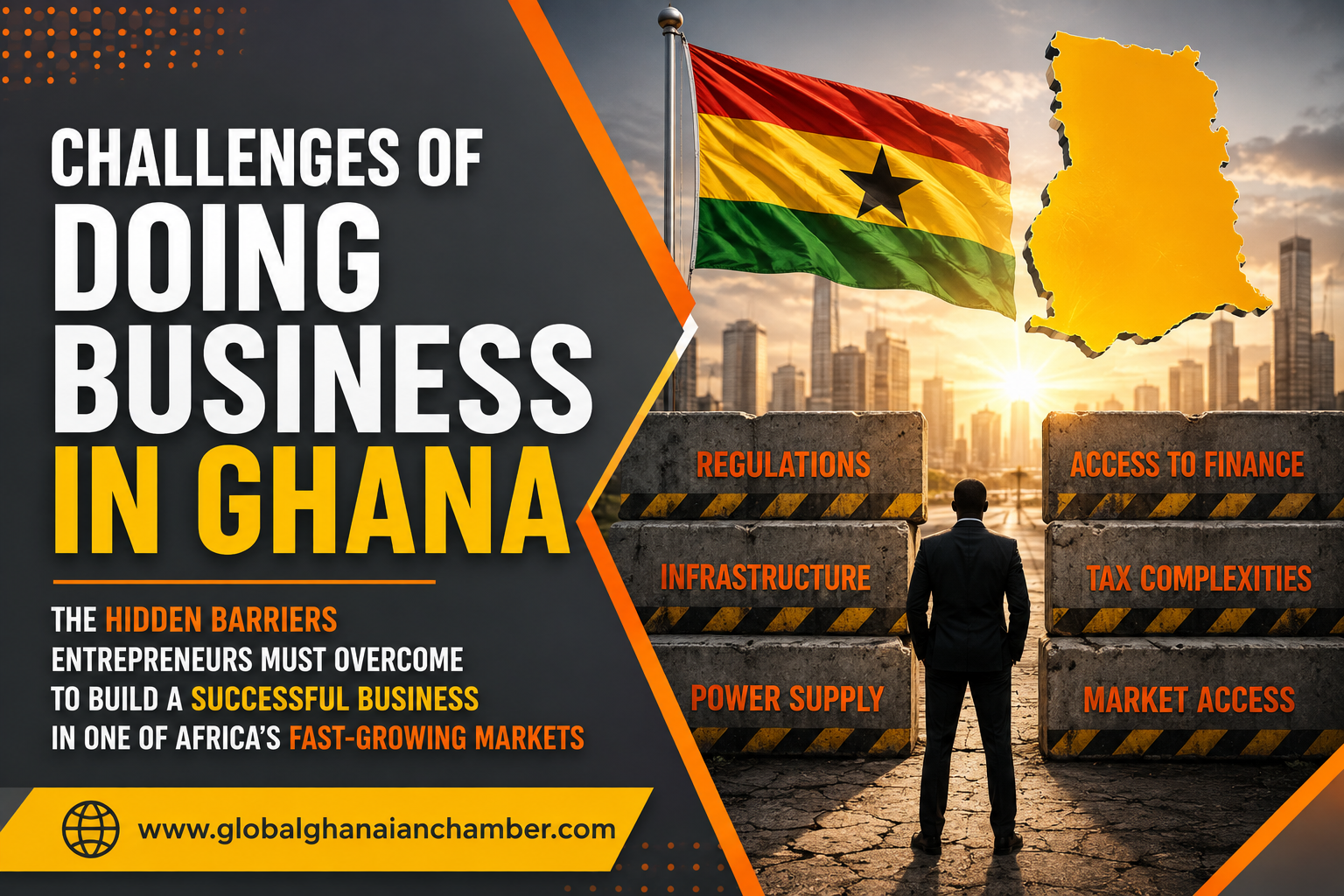

Ghana investment taxes: The complete investor’s guide to maximizing profits while staying tax-compliant in 2026
Every successful investment begins with one important question: How much of your profit will you actually keep?
Ghana has become one of Africa’s most attractive investment destinations. With its stable democratic environment, expanding infrastructure, strategic location, growing middle class, abundant natural resources, and increasing support for local and international businesses, investors continue to explore opportunities across manufacturing, agriculture, technology, healthcare, renewable energy, tourism, construction, education, mining, financial services, and logistics.
However, while many entrepreneurs spend months researching markets, competitors, suppliers, and financing, one crucial area is often overlooked—investment taxation.
Taxes are not simply expenses. They influence profitability, investment decisions, expansion plans, investor confidence, and long-term sustainability. A company generating millions in revenue can still struggle financially if its tax planning is poor. Conversely, a business with strong tax compliance and strategic planning can significantly improve cash flow, reduce legal risks, and strengthen investor trust.
Whether you are a local entrepreneur, foreign investor, multinational corporation, startup founder, SME owner, or institutional investor, understanding Ghana’s investment tax landscape has become essential in today’s competitive economy.
This comprehensive guide explains Ghana investment taxes, available incentives, compliance requirements, investment strategies, and practical considerations that every investor should understand before committing capital.
Why Ghana continues attracting global investors
Over the past decade, Ghana has established itself as one of West Africa’s leading investment destinations. The country’s consistent economic reforms, transparent legal framework, skilled workforce, digital transformation initiatives, and strategic position within the African Continental Free Trade Area (AfCFTA) make it increasingly attractive.
Investors appreciate Ghana because of its political stability, improving infrastructure, expanding consumer markets, access to regional trade, growing manufacturing capacity, and government initiatives that encourage private sector participation.
Yet every investment opportunity should include careful tax planning.
Taxes influence operating costs, investment returns, dividend distributions, expansion strategies, and exit planning.
Understanding these obligations before investing helps businesses avoid unnecessary financial surprises.
Understanding Ghana’s investment tax system
Ghana operates a structured taxation system administered by the Ghana Revenue Authority (GRA). Businesses operating within Ghana are generally expected to comply with national tax regulations based on their activities, income sources, and legal business structure.
The tax system is designed to generate government revenue while also encouraging investment through targeted incentives in priority industries.
Depending on the nature of an investment, businesses may encounter various forms of taxation including corporate income tax, value added tax, withholding tax, customs duties, capital gains tax, and other sector-specific obligations.
Each investment structure may have different tax implications.
Professional planning before incorporation often results in better long-term financial outcomes.
Corporate income tax in Ghana
Corporate income tax remains one of the most significant taxes affecting businesses.
Companies operating in Ghana are generally subject to corporate income tax on taxable profits, although rates may vary depending on the industry, sector, or investment incentives available.
Certain industries such as manufacturing, agriculture, technology, mining, petroleum, and free zone enterprises may qualify for preferential treatment under specific government programs.
Understanding which incentives apply can significantly improve profitability over time.
Businesses should maintain accurate accounting records, prepare financial statements, and comply with filing deadlines to avoid penalties.
Value Added Tax (VAT)
Businesses involved in supplying taxable goods and services may need to register for VAT once applicable thresholds are reached.
VAT affects pricing strategies, customer billing, cash flow management, and accounting procedures.
Companies should ensure proper invoicing systems, documentation, and reporting mechanisms are in place to maintain compliance.
Accurate VAT management reduces audit risks and strengthens financial transparency.
Withholding taxes investors should understand
Withholding tax plays an important role in Ghana’s taxation framework.
It may apply to payments such as professional services, dividends, interest, rent, royalties, and certain contractual transactions.
Businesses making qualifying payments are generally responsible for withholding the required tax and remitting it to the Ghana Revenue Authority.
Failure to comply may result in penalties and additional financial liabilities.
Proper financial systems help businesses remain compliant while simplifying reporting obligations.
Capital gains tax considerations
When investors dispose of qualifying assets, capital gains tax considerations may arise depending on applicable regulations.
Business owners planning mergers, acquisitions, asset sales, or company restructuring should carefully evaluate tax implications before completing transactions.
Strategic planning can help preserve investment returns while maintaining full legal compliance.
Investment incentives available in Ghana
One of Ghana’s strongest advantages is its investment incentive framework.
The government has introduced various programs designed to encourage investment in sectors that contribute to economic development.
Potential incentives may include reduced corporate tax rates, tax holidays, import duty exemptions, accelerated depreciation allowances, location-based incentives, and sector-specific tax relief.
Eligibility depends on investment size, business activity, geographic location, regulatory approvals, and compliance with applicable laws.
Investors should evaluate these opportunities carefully during project planning.
Free Zones and export-oriented businesses
Export-focused companies may benefit from Ghana’s Free Zones program.
The initiative aims to promote exports, increase industrial production, create employment, and attract foreign direct investment.
Qualified businesses operating within approved free zones may access favorable tax arrangements and other investment benefits.
Companies considering export operations should assess whether Free Zone registration aligns with their long-term business objectives.
Agriculture investment taxation
Agriculture continues to receive considerable government support.
Investments in commercial farming, food processing, agribusiness technology, irrigation, livestock production, fisheries, and agricultural exports may qualify for various incentives designed to encourage food security and rural development.
Given Africa’s growing demand for food production, agriculture remains one of Ghana’s most promising long-term investment sectors.
Manufacturing sector tax opportunities
Manufacturing plays a critical role in Ghana’s industrialization strategy.
Businesses investing in local production contribute to employment, export growth, technology transfer, and value addition.
Depending on applicable regulations, manufacturers may access incentives that improve competitiveness and reduce operational costs.
Careful investment planning allows manufacturers to maximize these opportunities.
Technology and digital economy investments
Ghana’s digital transformation continues creating opportunities in fintech, software development, artificial intelligence, cybersecurity, cloud computing, digital education, health technology, and e-commerce.
Technology companies should evaluate available investment incentives while ensuring compliance with intellectual property laws, data protection regulations, and tax obligations.
Digital businesses often benefit from structured financial planning during early growth stages.
Mining and natural resource taxation
Mining remains one of Ghana’s largest economic sectors.
Because natural resource industries involve significant capital investment, taxation within this sector includes specialized regulatory frameworks.
Investors should carefully understand licensing requirements, royalty obligations, environmental regulations, corporate taxation, and sector-specific compliance standards before proceeding.
Professional legal and financial guidance is particularly valuable in mining investments.
Renewable energy investment opportunities
Global demand for clean energy continues increasing.
Ghana’s commitment to sustainable development has encouraged investment in solar energy, wind projects, hydroelectric initiatives, waste-to-energy solutions, and energy infrastructure.
As governments worldwide prioritize renewable energy, investors should monitor policy developments that may create additional incentives in this sector.
Double taxation agreements
International investors often face concerns regarding taxation in multiple countries.
Double taxation agreements aim to reduce situations where the same income becomes taxable in more than one jurisdiction.
Understanding treaty provisions helps multinational businesses structure investments efficiently while remaining compliant with international tax regulations.
Professional international tax advice becomes especially important for cross-border investments.
Tax compliance protects business reputation
Many investors focus solely on reducing taxes.
However, responsible tax compliance builds credibility with financial institutions, government agencies, shareholders, business partners, and international investors.
Strong governance increasingly influences investment decisions.
Companies demonstrating transparent financial reporting often gain easier access to financing and strategic partnerships.
Common tax mistakes investors should avoid
Many businesses unintentionally create financial risks through avoidable mistakes.
Common issues include late tax filings, inaccurate financial records, poor bookkeeping, failure to register applicable taxes, misunderstanding available incentives, incorrect withholding calculations, and inadequate documentation.
Developing strong accounting systems from the beginning significantly reduces these risks.
Tax planning should become part of overall business strategy rather than an annual compliance exercise.
How professional tax planning increases profitability
Effective tax planning is not about avoiding taxes illegally.
It involves understanding legislation, utilizing available incentives, organizing business structures efficiently, maintaining accurate financial records, and making informed investment decisions.
Professional advisors help businesses identify opportunities while ensuring compliance with changing regulations.
This balance protects both profitability and corporate reputation.
The future of investment taxation in Ghana
As Ghana continues modernizing its economy, investment taxation will likely evolve alongside digital transformation, environmental sustainability, international trade, artificial intelligence, and regional economic integration.
Businesses that remain informed, adaptable, and proactive will be better positioned to compete.
Future investors will increasingly rely on digital tax administration, automated compliance systems, transparent reporting, and data-driven financial management.
Those who embrace these developments early will enjoy stronger operational efficiency and greater investor confidence.
Final thoughts
Every investment decision carries opportunity, but every opportunity carries responsibility. Understanding Ghana’s investment tax environment is not merely about complying with regulations—it is about protecting your capital, strengthening your business, and creating sustainable long-term growth. Investors who prioritize informed tax planning often gain greater financial stability, stronger credibility, and improved resilience in changing economic conditions. Before making your next investment, invest in knowledge first. The right tax strategy today can become the foundation of tomorrow’s success, allowing your business to grow with confidence while contributing meaningfully to Ghana’s economic future.